Do I Need a Visa to Enter Uganda
July 27, 2026
Can I Combine Botswana and Uganda in One Safari
July 27, 2026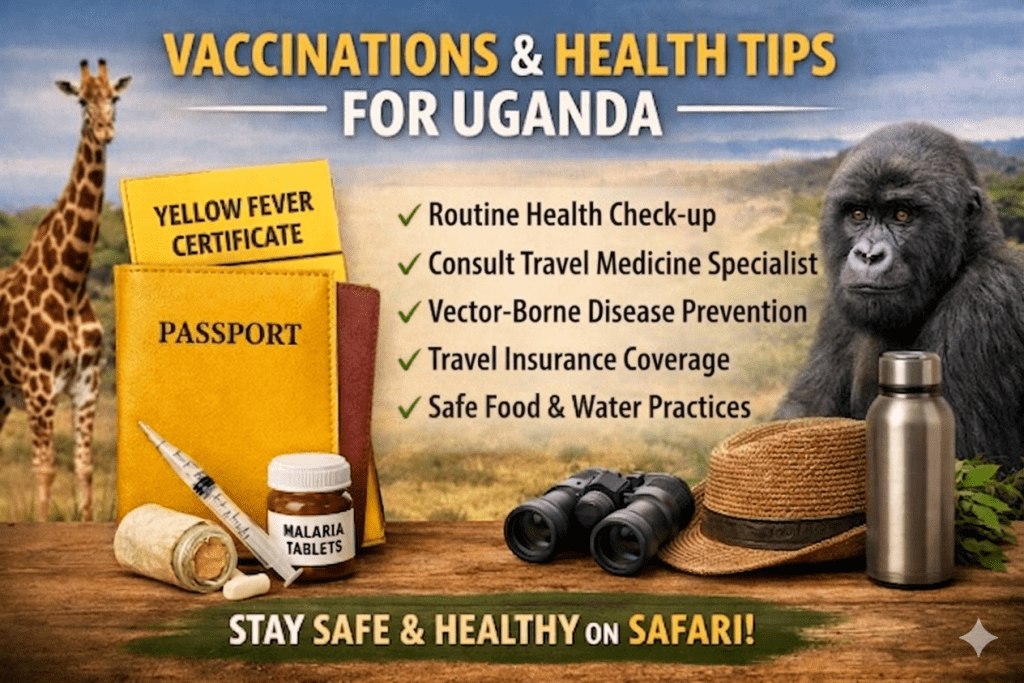
What Vaccinations Are Required for Uganda? A Complete Health Guide for Travelers
Uganda, known as the Pearl of Africa, is one of the most exciting travel destinations on the continent. From trekking endangered mountain gorillas in Bwindi Impenetrable National Park to exploring the wildlife-rich savannahs of Queen Elizabeth and Murchison Falls National Parks, Uganda offers unforgettable experiences for adventurers, nature lovers, and wildlife enthusiasts alike. As you prepare for your journey, one important question often arises: “What vaccinations are required for Uganda?”
Proper health preparation is an essential part of planning any international trip. Understanding Uganda’s vaccination requirements and recommended health precautions will help ensure a safe, enjoyable, and worry-free safari experience.
In this guide, Jomert Gorilla Safaris explains the vaccinations required for Uganda, recommended immunizations, and important travel health tips every visitor should know.
Why Vaccinations Matter When Traveling to Uganda
Vaccinations help protect travelers from diseases that may be uncommon in their home countries but are present in certain parts of Africa. By getting the appropriate vaccinations before departure, visitors can significantly reduce health risks and enjoy their Uganda safari with confidence.
Travelers are encouraged to consult a qualified healthcare provider or travel clinic several weeks before departure to discuss recommended vaccinations and travel health advice.
Yellow Fever Vaccination: The Main Requirement for Uganda
The most important vaccination requirement for travelers entering Uganda is Yellow Fever vaccination.
Ugandan immigration authorities may require visitors to present a valid International Certificate of Vaccination or Prophylaxis (ICVP) as proof of Yellow Fever vaccination upon arrival.
Yellow Fever is a viral disease transmitted by mosquitoes in some tropical regions. The vaccine provides long-lasting protection and is highly effective.
Travelers should receive the vaccine well before their departure date and carry their Yellow Fever vaccination certificate with their travel documents.
Why Is Yellow Fever Vaccination Important?
- It is an official entry requirement for many travelers entering Uganda.
- It helps prevent the spread of Yellow Fever.
- It provides long-term protection against a potentially serious illness.
- It may also be required when traveling between African countries.
Before traveling, always confirm current entry requirements with the relevant authorities or your healthcare provider.
Recommended Vaccinations for Uganda
In addition to Yellow Fever vaccination, healthcare professionals often recommend several routine and travel-related vaccinations for visitors traveling to Uganda.
Hepatitis A
Hepatitis A can be contracted through contaminated food or water. Vaccination is commonly recommended for travelers visiting Uganda.
Hepatitis B
Hepatitis B is spread through contact with infected blood or bodily fluids. Many travel health specialists recommend vaccination, especially for extended stays.
Typhoid
Typhoid fever can be transmitted through contaminated food and water. Vaccination is often advised for travelers exploring rural areas or spending significant time in local communities.
Tetanus, Diphtheria, and Pertussis
Travelers should ensure that routine vaccinations are up to date before traveling internationally.
Measles, Mumps, and Rubella (MMR)
Health authorities generally recommend ensuring routine childhood vaccinations are current before international travel.
Polio
Visitors should verify that their polio vaccination status is up to date according to the recommendations of their home country.
Malaria Prevention in Uganda
Although there is currently no widely used routine vaccination for malaria for most international travelers, malaria prevention remains an important consideration when visiting Uganda.
Malaria is present in many parts of the country, including some popular tourist destinations.
Travelers should discuss malaria prevention options with their healthcare provider before departure.
Common preventive measures include:
- Taking prescribed antimalarial medication.
- Using insect repellent.
- Wearing long-sleeved clothing during evening hours.
- Sleeping under mosquito nets where appropriate.
- Staying in accommodations that provide mosquito protection.
At Jomert Gorilla Safaris, we encourage all guests to discuss malaria prevention strategies with their travel health specialist before arriving in Uganda.
Vaccinations for Gorilla Trekking Visitors
Gorilla trekking is one of Uganda’s most popular wildlife experiences. Because mountain gorillas share a significant percentage of their DNA with humans, protecting both visitors and wildlife from disease transmission is extremely important.
Travelers participating in gorilla trekking should ensure they are in good health and follow all guidelines provided by the Uganda Wildlife Authority and their guides.
To help protect the gorillas:
- Avoid trekking if you are experiencing symptoms of illness.
- Follow all park regulations.
- Maintain the recommended distance from gorillas.
- Practice good hygiene throughout your safari.
These measures help safeguard both travelers and the endangered mountain gorilla population.
Travel Health Tips for Uganda
In addition to vaccinations, visitors should take several practical steps to stay healthy during their safari.
Stay Hydrated
Uganda’s climate can be warm, particularly during game drives and outdoor activities. Drink plenty of safe bottled or treated water throughout your trip.
Practice Food Safety
Choose freshly prepared meals from reputable establishments and maintain good hand hygiene.
Carry a Basic Medical Kit
Consider packing:
- Personal medications
- Pain relievers
- Bandages
- Antiseptic wipes
- Insect repellent
- Sunscreen
Purchase Travel Insurance
Comprehensive travel insurance can provide valuable protection in case of medical emergencies, trip interruptions, or unexpected situations.
When Should You Get Vaccinated?
Travel health experts generally recommend consulting a healthcare provider four to eight weeks before travel. This allows enough time for vaccinations to become effective and for any required vaccine schedules to be completed.
Even if your departure date is approaching, it is still beneficial to seek professional travel health advice.
Why Travel with Jomert Gorilla Safaris?
At Jomert Gorilla Safaris, we are committed to helping our guests enjoy a safe, comfortable, and unforgettable safari experience. Our team provides guidance on travel planning, gorilla trekking permits, accommodation, transportation, and important travel requirements to help visitors prepare for their journey with confidence.
Whether you’re planning a gorilla trekking adventure, wildlife safari, family holiday, or cultural tour, we are here to support you every step of the way.
Final Thoughts
So, what vaccinations are required for Uganda? The most important requirement for many travelers is proof of Yellow Fever vaccination, while additional vaccinations such as Hepatitis A, Hepatitis B, Typhoid, and routine immunizations are often recommended depending on your travel plans and medical history.
Preparing for your trip with the appropriate vaccinations and health precautions will help ensure a safe and rewarding adventure in Uganda. Before you travel, consult a qualified healthcare provider for personalized medical advice and the latest vaccination recommendations.
Contact Jomert Gorilla Safaris today to begin planning your unforgettable journey to the Pearl of Africa.
Request for A Trip Quote
We would love to hear from you. Fill in the brief form below to get a free quote or advice for your Uganda Gorilla Safari. You can email us directly via info@jomertgorillasafaris.com or reach us on WhatsApp via +256781216998